Volkswagen · Car Modules
Volkswagen ABS Module & Instrument Cluster Repair
Volkswagen’s ABS/ESC control module and instrument cluster are two of the most common electronic failure points across the Jetta, Golf, GTI, Passat, Beetle, Atlas, and Taos lineup. We repair both at the component level instead of replacing the full assembly.
- ★ Google reviews
- Component-level repair
- 30-day warranty
- Mail-in across Canada
At a glance
- Service
- Volkswagen ABS Module and Instrument Cluster
- Common symptoms
- ABS, ESC, and Traction Control warning lights all coming on at once, Loss of ABS, traction control, and stability control functions, Reduced braking assist or a hard brake pedal
- Turnaround
- Diagnosis first; repairs that need parts ordered typically take 2 weeks to 2 months — we confirm the timeline with your quote
- Warranty
- 30-day warranty after repair
- How
- Mail-in from anywhere in Canada · free quote
What Do These Modules Do?
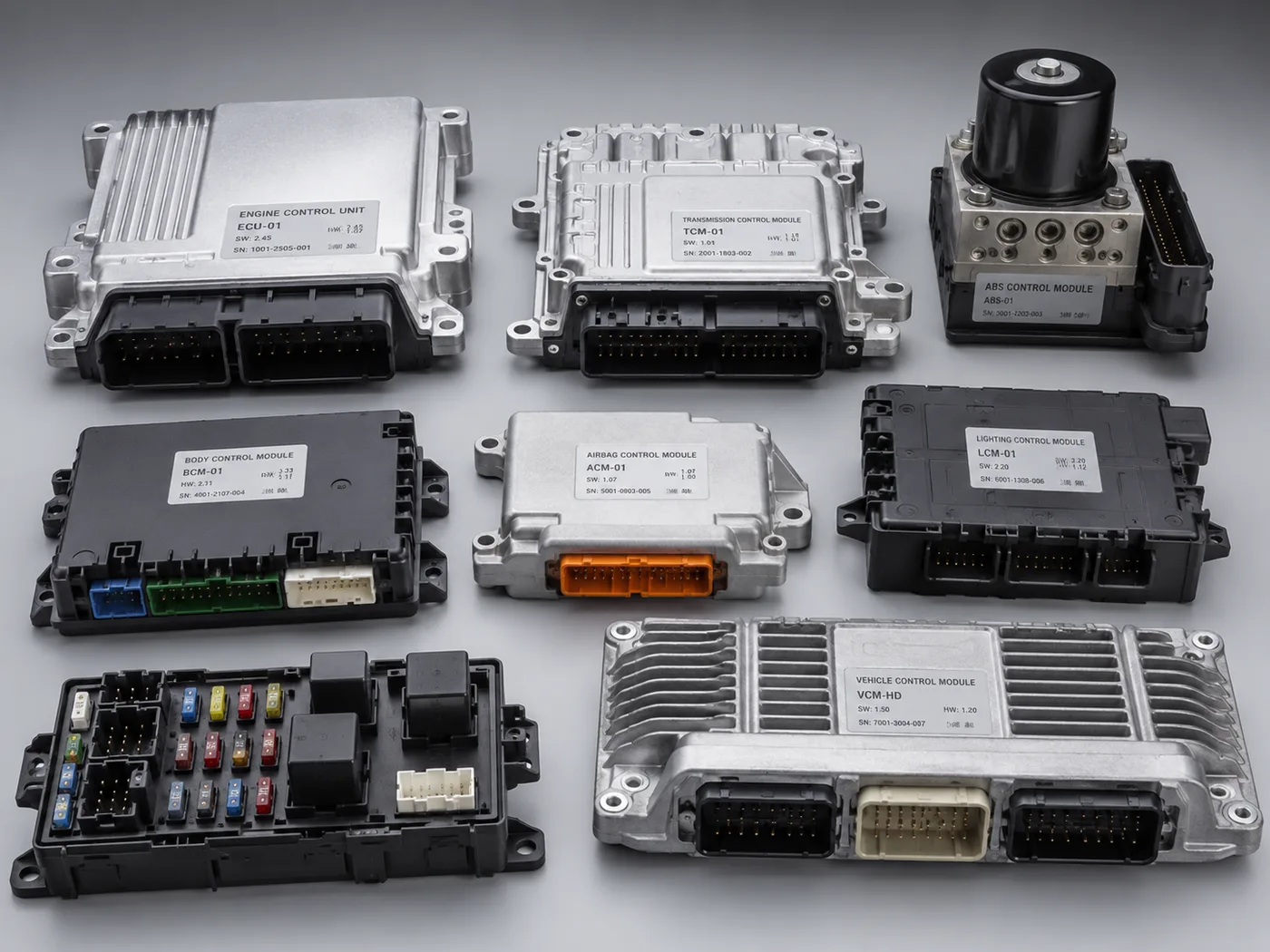
The ABS/ESC module regulates brake pressure to each wheel through an integrated pump and valve block to control anti-lock braking, traction control, and electronic stability control. The instrument cluster displays speed, warning lights, and — on many VW models — plays a role in immobilizer authorization, meaning a failed cluster can prevent the car from restarting.
- ATE MK60 ABS module (Golf Mk5, Passat, Touran-era platform)
- ABS/ESC modules used on 2010-2014 Jetta, Golf, Beetle, Passat
- ABS/ESC modules used on 2013-2022 Jetta, Golf, GTI, Passat, Taos, Atlas
- Instrument clusters on 2008-2017 Jetta and Golf
Why does the Volkswagen ABS Module and Instrument Cluster fail?
Most failures trace back to internal component aging, brake fluid contamination, and heat cycling.
- Internal Component Aging – the ATE MK60 and related ABS modules develop internal faults as vehicles age, storing fault codes such as 01435.
- Brake Fluid Contamination – absorbed moisture corrodes internal pump and valve components over time.
- Heat Cycling – engine-bay heat causes wear on solder joints and internal circuitry.
- Cluster Circuit Board Wear – aging solder joints and connectors on the instrument cluster board cause intermittent or total failure.
Warning signs of a failing Volkswagen ABS Module and Instrument Cluster
The most common signs are ABS, ESC, and traction control warning lights all coming on at once; loss of ABS, traction control, and stability control functions; and reduced braking assist or a hard brake pedal.
- ABS, ESC, and Traction Control warning lights all coming on at once
- Loss of ABS, traction control, and stability control functions
- Reduced braking assist or a hard brake pedal
- Instrument cluster going blank, flickering, or gauges not reading correctly
- No-start / no-crank condition tied to a failed cluster (immobilizer-linked models)
- Fault codes stored even after a battery disconnect
If you’re seeing any of the above, mail your module in for diagnosis — don’t pay for a full dealer replacement first.
How we repair the Volkswagen ABS Module and Instrument Cluster
- Diagnostic testing to confirm module failure vs. sensor or wiring fault
- Component-level repair of damaged solder joints, drivers, and pump-motor circuits
- Data recovery and reprogramming to factory settings
- Bench testing to verify full functionality before return
- Plug-and-play return — a replacement module normally requires VCDS coding, ours is cloned to your vehicle so no dealer visit is required in most cases
Why send your Volkswagen module to ECU Repair Doctor?
- Component-level repair, not just a fault-code reset
- Cloned to your vehicle — avoids the coding/calibration step a replacement module requires
- Clear timeline after diagnosis — repair time depends on parts
- Mail-in service, anywhere in Canada
- 30-day warranty on every repair
Which Volkswagen models are covered?
- VW Jetta, Jetta GLI
- VW Golf, GTI
- VW Passat, Beetle
- VW Atlas, Taos
- VW Tiguan
Volkswagen ABS Module and Instrument Cluster: frequently asked questions
What are the symptoms of a failing Volkswagen ABS Module and Instrument Cluster?
Common signs include ABS, ESC, and traction control warning lights all coming on at once; loss of ABS, traction control, and stability control functions; reduced braking assist or a hard brake pedal; instrument cluster going blank, flickering, or gauges not reading correctly. If you see these, have the module tested before paying for a dealer replacement.
What causes Volkswagen ABS Module and Instrument Cluster failure?
The most common causes are internal component aging; brake fluid contamination; heat cycling; cluster circuit board wear.
Can the Volkswagen ABS Module and Instrument Cluster be repaired instead of replaced?
Yes, in most cases. We repair the original module at the component level, so it keeps its VIN and immobilizer data and goes back in plug-and-play. If it can't be saved, we can clone your data onto a replacement unit.
Which models do you cover?
VW Jetta, Jetta GLI, VW Golf, GTI, VW Passat, Beetle, VW Atlas, Taos, VW Tiguan. Call or text 647-784-9939 if your model isn't listed.
How do I send my module in?
Get a free quote by phone, text or the contact form, then pack the module in an anti-static bag with padding and mail it to 76 Sherry Road, Unit H, Scarborough, ON M1L 2J9. We diagnose it first; repairs that need parts ordered typically take 2 weeks to 2 months, and we confirm the timeline with your quote. Every repair has a 30-day warranty.
Last updated October 2026
Don’t replace your Volkswagen module — repair it.
Most failed modules can be repaired for a fraction of the dealer replacement price, and come back cloned to your vehicle so there’s no extra programming visit.